Tapping
Kinesiotaping is based on the principles of kinesiology and aims to facilitate the body’s natural healing process by supporting injured or overworked muscles, improving blood circulation, and reducing pain and inflammation.This technique involves applying a special elastic tape to the skin to provide support, stability, and relief for various musculoskeletal conditions.
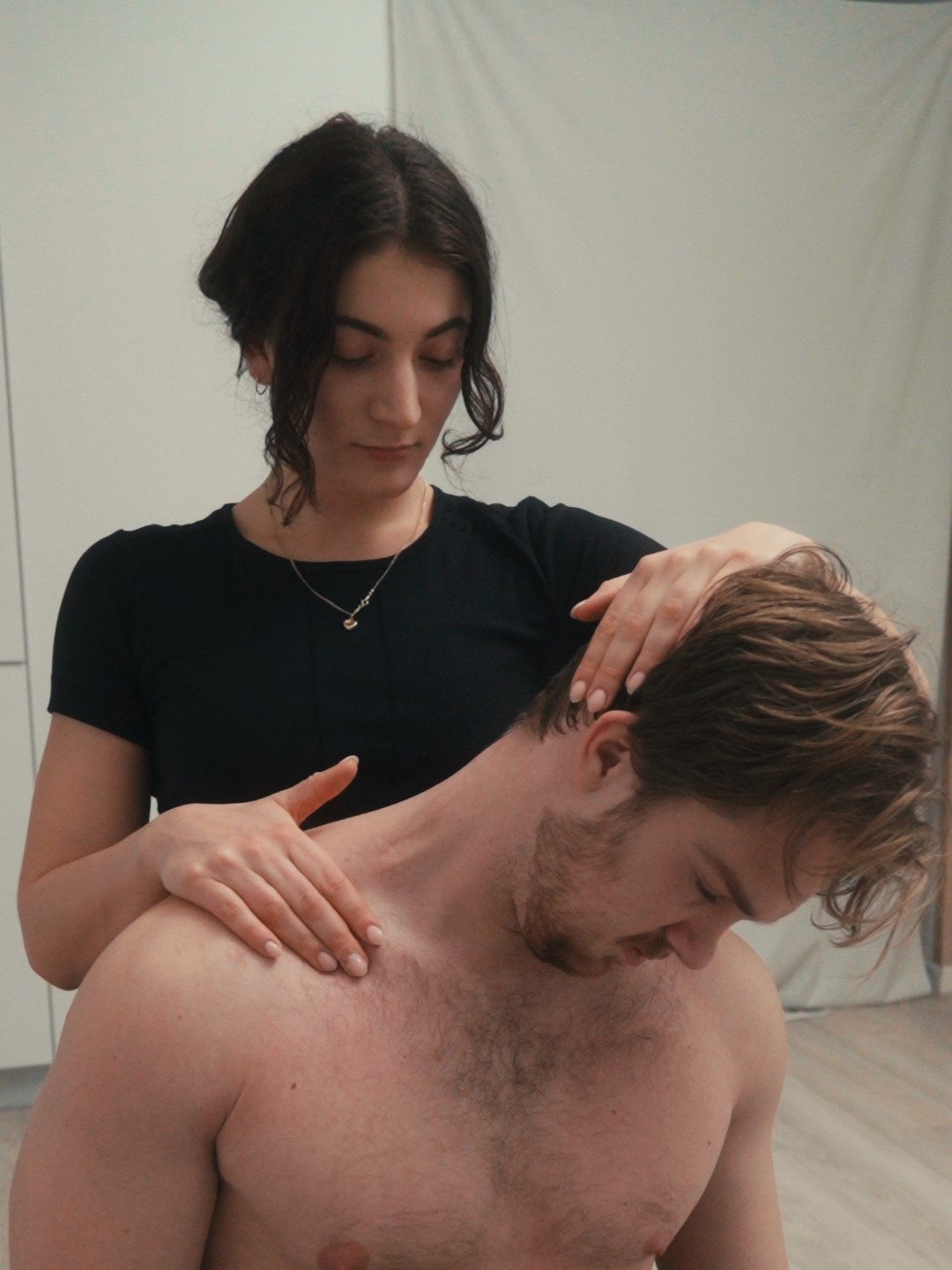
Support and Stability for Your Body
At BUJA, I am excited to introduce you to the benefits of tapping, a technique that’s gaining popularity for its ability to provide support, relief, and stability to the body. Tapping, also known as kinesiology taping, involves applying a special elastic tape to the skin to support muscles, ligaments, and joints without restricting movement. Whether you’re an athlete, someone recovering from an injury, or just looking for extra support, tapping can be a valuable addition to your wellness routine.
The Benefits of Tapping
Tapping offers a range of benefits that go beyond simple support. It helps improve circulation, reduce inflammation, and relieve pain by gently lifting the skin and allowing better blood and lymphatic flow. Tapping can also provide stability to muscles and joints, making it easier to move and perform daily activities. Many people find that it helps speed up recovery from injuries, reduces fatigue, and enhances overall performance.
Interesting Facts About Tapping
- The tape used in tapping is made from a blend of cotton and nylon, designed to mimic the elasticity of human skin. It’s breathable, water-resistant, and can be worn for several days at a time.
- Tapping doesn’t just benefit athletes; it’s also used by people of all ages for various conditions, including back pain, plantar fasciitis, and even postural support.
- The tape is applied in specific patterns depending on the desired effect, such as reducing swelling, supporting weak muscles, or enhancing muscle activation.
A Brief History of Tapping
The concept of kinesiology taping was developed in the 1970s by Dr. Kenzo Kase, a Japanese chiropractor. Dr. Kase sought a method to support injured muscles and tissues while allowing full range of motion, which traditional taping methods often restricted. His invention gained international attention during the 2008 Beijing Olympics, when athletes were seen wearing the brightly colored tape, and it has since become a staple in sports medicine and rehabilitation.
Considerations and Potential Drawbacks
While tapping offers many benefits, it’s important to use it correctly. If applied improperly, it can cause skin irritation or fail to provide the desired support. Some people may experience mild itching or discomfort from the adhesive, especially if they have sensitive skin.
Who Can Benefit from Tapping?
Tapping is suitable for almost anyone. Athletes use it to enhance performance and prevent injuries, while others may find it helpful for managing chronic pain or recovering from surgery. It’s also beneficial for those dealing with conditions like arthritis, tendonitis, or general muscle soreness.
When and Where to Use Tapping
Tapping can be used on almost any part of the body, from shoulders and knees to the lower back and feet. It’s particularly useful during physical activity, whether you’re training for a marathon, recovering from an injury, or just going about your daily routine. The tape is flexible enough to move with your body, providing continuous support.
Why Choose Taping?
When it comes to taking care of your body, I believe in methods that truly work. During my swimming career, tapping was a crucial part of my routine. It helped me reduce muscle tension and kept me going strong through long, demanding training sessions. When I started running longer distances, tapping became even more essential. It provided the support my ankles needed, allowing me to push through without the fear of injury.
I know firsthand how effective tapping can be in both preventing and managing pain. It’s not just for athletes—whether you’re active daily or just need some extra support, tapping can make a real difference. It offers the stability and relief you need to stay at your best, just as it did for me. Let me share this experience with you and help you find the same confidence and comfort I’ve relied on for years.
@buja.fit
Tereza Bujárková

fitstop.com
coach